Speaking & Fluency
Duolingo Alternatives for Speaking Practice: Tutoro, Duolingo, or a Human Tutor?
Most language learners discover that Duolingo’s speaking practice is limited. If you want real English conversation skills, you’ll need more than just repeating phrases into your phone. This comparison explores the best Duolingo alternatives for speaking practice: Tutoro, Duolingo, and a human tutor. Which is right for you?
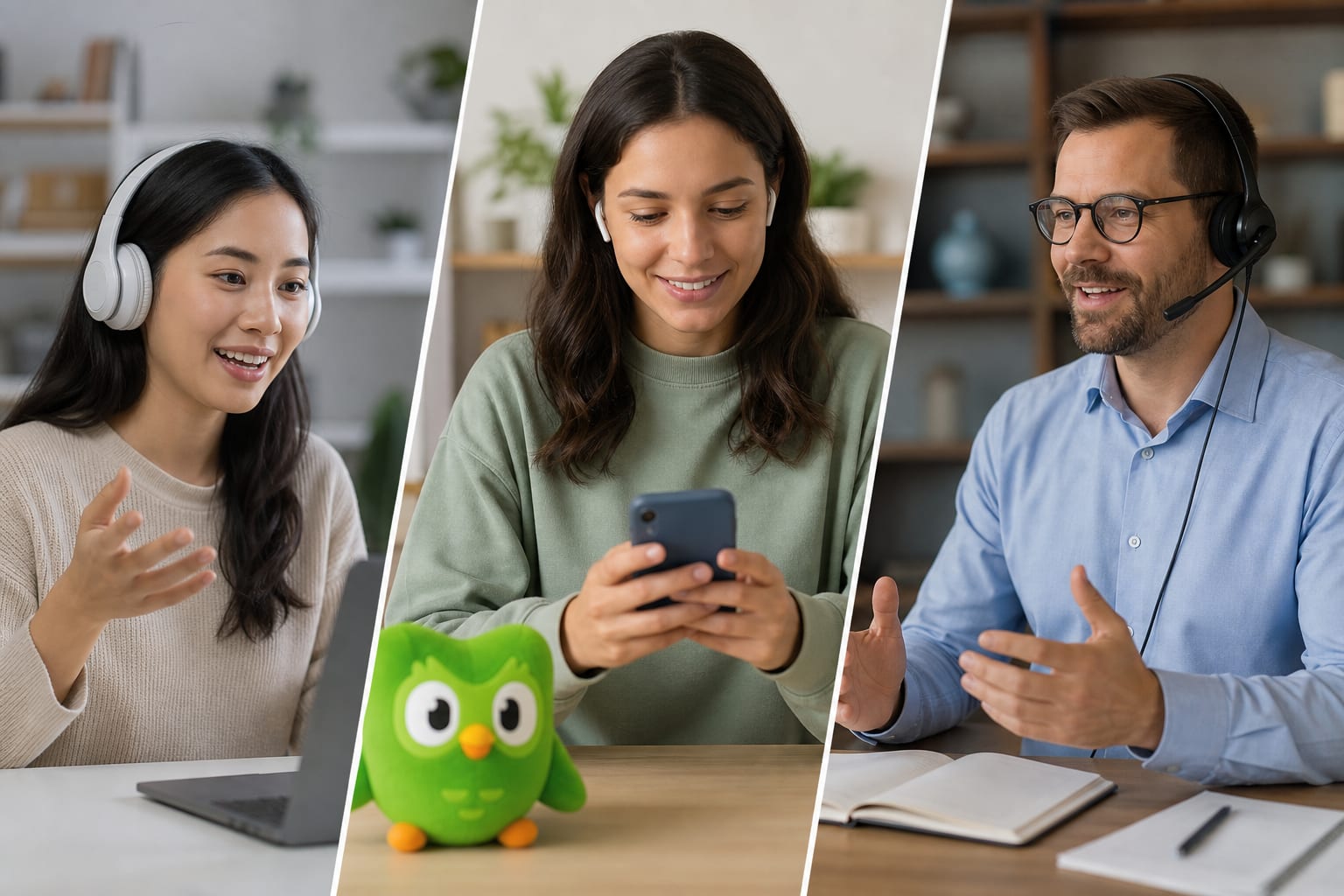
Why look beyond Duolingo for speaking?
Duolingo’s appeal is its simplicity: you tap, listen, and repeat after short prompts. But when it comes to speaking real English, most learners find themselves stuck. The app’s speaking exercises focus on pronunciation and phrase recognition, not real conversation. Fluency, however, demands back-and-forth dialogue, unpredictable topics, and live feedback. This is why so many learners search for Duolingo alternatives for speaking practice once they reach an intermediate level.
Research shows that actual conversation, not just repetition, is vital for developing speaking skills. While Duolingo introduces some spoken elements, they rarely simulate a real exchange. Learners often discover that their first live conversation feels completely different from app drills. Studies evaluating Duolingo’s speaking impact consistently note this gap.
Duolingo alternatives for speaking practice: what are your options?
When learners realize Duolingo’s limits, the main alternatives are Tutoro (an AI-powered English tutor), human tutors, and Duolingo itself. Each takes a different approach to speaking practice. The app delivers genuine conversation inside a chat thread, with adaptive feedback and pronunciation scoring. Human tutors offer live interaction, deep correction, and the ability to tailor lessons to your needs. Duolingo remains the most accessible, but its speaking practice is limited in both realism and feedback.
Let’s examine how each option performs on the criteria that matter for speaking progress, including the realism of conversation, quality of feedback, availability, price, and how well each supports structured progression.
| Tutoro | Duolingo | A human tutor | |
|---|---|---|---|
| Real speaking practice | Real conversation with AI in lessons and scenarios | Phrase repetition, not real conversation | Live conversation and improvisation |
| Correction and feedback | Immediate, per-word pronunciation and adaptive correction | Checks if you repeated the phrase; little targeted feedback | Rich, nuanced correction for all language skills |
| When you can practise | Available 24/7 for any length of lesson | Always available but limited speaking practice | Depends on scheduling; limited flexibility |
| What it costs | Free with subscription to remove limits | Free and paid tiers, but speaking practice is basic | Most expensive; charges per lesson or hour |
| Structured progression | Authored curriculum with adaptive spaced repetition | Theme-based units but little speaking progression | Curriculum varies by tutor, personal but less standardized |
Real speaking practice: what actually works?
Speaking skill is built by producing language in real time. This means not just repeating phrases, but responding, improvising, and correcting mistakes as you go. Human tutors are unmatched for true live conversation, adjusting topics and follow-up questions on the fly. For example, a tutor might ask, "Why do you think people travel?" and then challenge you to justify your answer, pushing you to think and speak spontaneously.
Tutoro is the closest digital alternative: its AI teachers run entire lessons inside a chat, requiring you to listen, speak, and reply as you would with a real person. The conversation moves forward based on your answers, and the AI adapts the difficulty dynamically. For instance, if you answer a question easily, the AI might ask you a more complex follow-up, or switch topics to keep you challenged. In contrast, Duolingo’s speaking tasks are short, scripted prompts. You might say “The cat is on the table,” but the app won’t ask you to explain why or follow up with a related question. There’s little opportunity for improvisation or real dialogue.
For learners aiming to bridge the gap between app drills and real conversations, this kind of AI tutor and human tutors both offer authentic practice. Duolingo is useful for beginners or those wanting a low-pressure introduction, but it does not build full conversational ability. Research on AI language tutors suggests that interactive, adaptive conversation is essential for fluency, and that scripted drills alone are not enough.
Correction and feedback: where does each option excel?
Effective feedback is crucial to developing confident speaking. Human tutors provide the richest feedback: they catch grammar slips, suggest natural phrasing, and correct pronunciation instantly. Their experience means you get context-specific advice. For example, a tutor might notice you overuse "very" and help you replace it with stronger adjectives, or point out subtle pronunciation errors that an app might miss.
Tutoro’s AI teacher offers detailed pronunciation scoring for each word you say. Rather than a simple pass or fail, you receive "good," "fair," or "poor" feedback on each word, allowing you to pinpoint exactly what needs work. It also highlights weak vocabulary and grammar in your conversation, cycling them back into future practice. If you consistently struggle with irregular verbs, these will reappear in new contexts until you master them. This adaptive correction, while not as nuanced as a human, is far beyond what most apps offer.
Duolingo’s feedback is limited. The app simply checks if you repeated the phrase correctly; it rarely tells you which part was unclear, or how to improve your fluency. If you want targeted correction, you’ll need a more interactive tool or a real tutor. Studies on human tutor effectiveness confirm that nuanced feedback accelerates speaking progress.
When you can practise: availability matters
One of the biggest challenges in language learning is finding the time, and the partner, to practise speaking. Human tutors are valuable for their expertise, but sessions depend on scheduling and availability. If you want to practise in short bursts, at unpredictable hours, you may struggle to find a tutor when you need one. For example, if you have 10 minutes before work, arranging a live session is rarely possible.
Tutoro offers a unique advantage here: the AI English tutor is available 24/7. You can open the app and practise a full speaking lesson or scenario whenever motivation strikes, even for just five minutes. This flexibility means you can fit meaningful practice into your daily routine, whether you’re commuting, on a lunch break, or winding down at night.
Duolingo’s speaking exercises are also always available, but their limited scope means you may “outgrow” them quickly. For serious speaking progress, on-demand conversation practice is a major benefit.
Structured progression: which keeps you advancing?
Progress in speaking is not just about practice hours, but about building on previous knowledge in a smart, structured way. Human tutors can design a curriculum, but results vary by tutor and consistency. Some tutors may focus on conversation, while others emphasize grammar or test preparation, making your progress dependent on their style and your ability to communicate your needs.
Tutoro stands out with its authored lesson maps: every learner follows an ordered curriculum, with vocabulary and grammar resurfacing automatically based on your weak spots. The app tracks your progress, adapts difficulty, and never repeats what you’ve already mastered. For example, if you have mastered "used to" in conversation, you won’t see it again as a basic exercise. Duolingo does offer progression through themed units, but its speaking content is thin and quickly becomes repetitive. You are more likely to encounter the same simple phrases than to build up toward real fluency.
Tutoro’s approach to structured speaking practice is especially effective for learners who want consistency and visible progress without managing lesson plans themselves. If you already have a tutor you like, or prefer group classes, Tutoro may feel less personal, but for self-driven learners, the adaptive map and feedback fill a real gap.
Price: how much does each alternative cost?
Cost matters, especially for learners planning to practise regularly. Duolingo offers a free tier and premium upgrades, but the speaking practice remains basic at any price. Tutoro’s core system is free to use, with a subscription removing the energy limit and unlocking every AI tutor. Human tutors are the most expensive option. Their time and expertise justify the price, but this can quickly add up, especially for frequent sessions. For the majority of learners, the best value comes from an option that balances cost, availability, and real speaking improvement.
It’s important to be realistic about your budget and goals. If you need daily practice but can’t afford regular tutor sessions, an AI tutor or a hybrid approach (using both an app and occasional live lessons) may be the most sustainable path.
Summary: which alternative suits you?
If you want to move beyond phrase repetition and develop real speaking skills, Tutoro and human tutors are the top Duolingo alternatives for speaking practice. The app combines on-demand lessons, immediate pronunciation feedback, and adaptive curriculum at a fraction of a tutor’s cost. Human tutors deliver the deepest correction and human connection, but require more commitment and budget. Duolingo remains a solid starting point, but does not offer enough for advanced or even intermediate speaking progress.
For most learners, starting to practice English with AI is the fastest way to unlock real conversation skills and build confidence before moving to live sessions or high-stakes situations. Choose the option that matches your time, budget, and goals, but don’t settle for repetition alone when real speaking is within reach.
Common questions
What are the best Duolingo alternatives for speaking practice?
The best Duolingo alternatives for speaking practice are Tutoro and human tutors. Tutoro offers real conversation with AI, adaptive feedback, and 24/7 availability. Human tutors provide the richest correction and personal interaction, but require more time and budget.
Is Tutoro better than Duolingo for speaking English?
Tutoro is better than Duolingo for developing actual English speaking skills. Unlike Duolingo, which focuses on phrase repetition, Tutoro runs full conversations, gives detailed pronunciation feedback, and adapts to your weaknesses for more effective practice.
Can I get real conversation practice with an AI tutor?
Yes, modern AI tutors like Tutoro provide real conversation practice by running lessons as interactive chats. You speak, listen, and reply as you would with a human, and the AI gives feedback on your pronunciation and grammar in real time.
How does feedback from a human tutor compare to AI?
Human tutors give the most personalized feedback, correcting grammar, vocabulary, and pronunciation in context. AI tutors like Tutoro provide detailed, immediate feedback on pronunciation and adapt exercises to your weak spots, but may miss some nuances only a human catches.
Is Duolingo enough to become fluent in speaking English?
Duolingo helps with basic pronunciation and vocabulary, but is not enough to reach fluency in speaking English. For real conversational skills, you need more interactive practice, feedback, and unpredictable dialogue than Duolingo’s speaking exercises provide.