Study Methods
How to Watch Shows in English and Actually Learn
Most people who watch shows in English learn almost nothing. The problem isn't the shows, it's how they're watched. Here's how to watch shows in English and actually learn, with six techniques that turn entertainment into measurable progress.
Why most people watch shows and learn nothing
There is a widely repeated piece of advice in the English learning world: just watch shows, and the language will soak in. It sounds wonderful, which is exactly why it has survived. The problem is that for most learners, it does not work, and the reason is uncomfortable to admit.
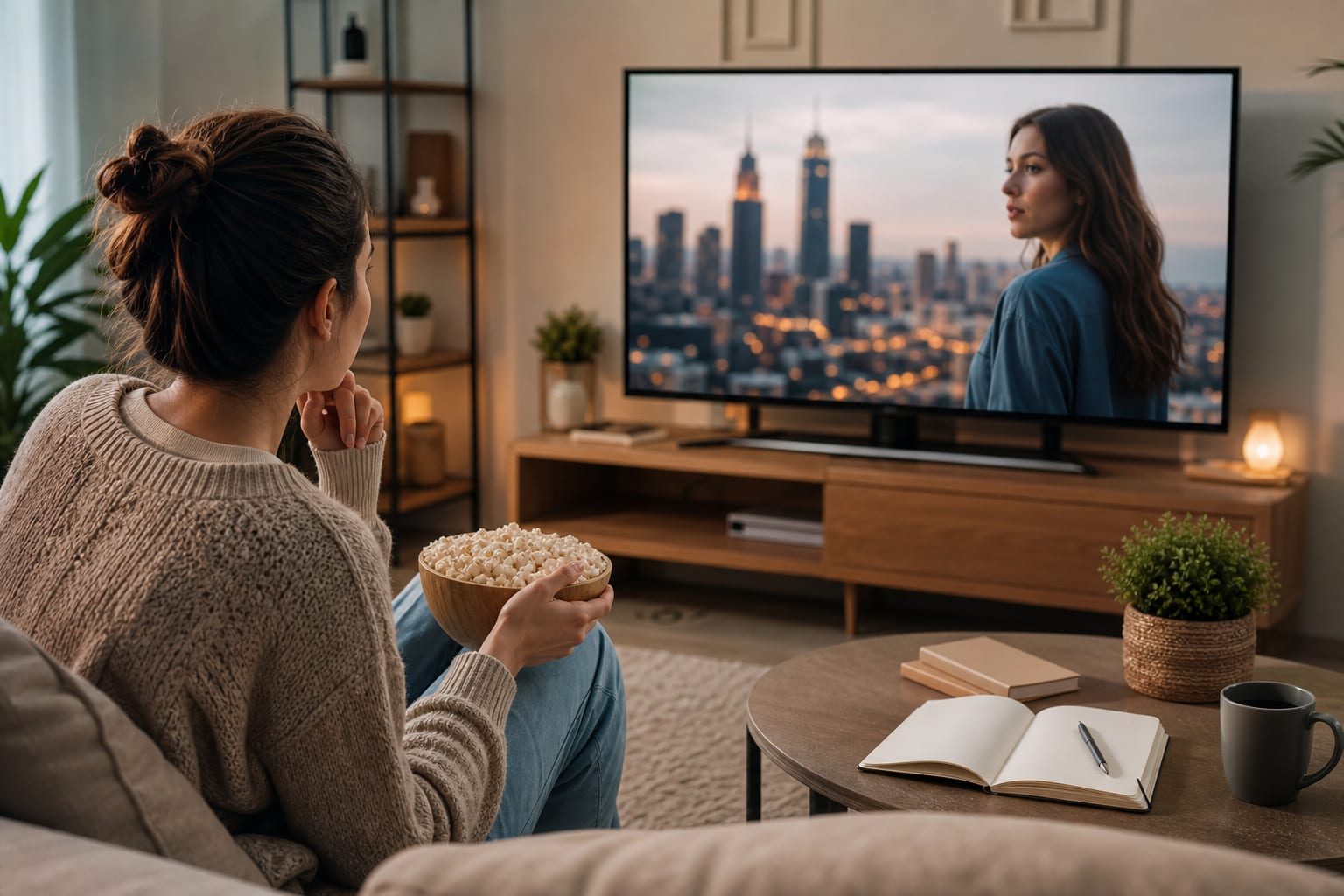
When you watch a show for pleasure, your brain does not process language. It processes story. You follow the plot, the emotions, the visuals, and you fill in the gaps in the dialogue with context. By the end of an episode, you can describe what happened, but you could not repeat a single sentence anyone said. You have understood the show while learning almost nothing from it.
This is not a failure of willpower. It is how attention works. Comprehension and acquisition are different processes. You can understand a scene perfectly and still retain none of its language, because your brain was busy predicting what happens next, not noticing how it was said.
The fix is not to watch more. It is to watch differently. The techniques below turn a show from entertainment into a training tool, and the surprising part is that the change is smaller than most learners expect.
The input problem: what makes a show teachable
Stephen Krashen's input hypothesis, still the most influential idea in second language acquisition, argues that we acquire language when we understand messages slightly above our current level. He called it comprehensible input. The key word is comprehensible. If you understand less than roughly 80 to 90 percent of what you hear, you are not acquiring anything, you are just lost.
This is where most show-watching goes wrong. A learner at B1 puts on a prestige drama with fast dialogue, heavy accents and cultural references, follows maybe half of it, and calls it a study session. It was not. It was an hour of frustration dressed up as immersion. The research on comprehensible input and second language acquisition is clear on this point: input below your comprehension threshold does not become learning, no matter how many hours you log.
So the first decision is not which show to watch. It is whether the show is at your level. A good test: watch one scene without subtitles. If you can follow the gist and catch most of the individual words, the show is teachable. If you are only catching fragments, pick something simpler. Sitcoms and procedural dramas tend to use plainer, more repetitive language than prestige television, which makes them better learning material even when they are less exciting.
Subtitles on or off? The evidence
There is a persistent myth that subtitles are cheating, and that the only honest way to improve listening is with them off. The evidence points the other way. Studies comparing subtitle conditions consistently find that learners who watch with subtitles in the target language, often called intralingual subtitles, retain more vocabulary and understand more than those watching with no subtitles or with subtitles in their first language.
The reason is simple. When you hear a word you do not know, you cannot learn it from sound alone, because you cannot even tell where one word ends and the next begins. Written subtitles segment the speech for you. They turn a blur of sound into visible words, and that is the bridge from hearing to knowing. Research on incidental vocabulary acquisition through television viewing shows measurable gains precisely when learners can connect the spoken form to the written form.
So the answer to "subtitles on or off" is: on, in English, for learning sessions. This is not weakness. It is the most efficient route to the point where you can eventually turn them off. Use first-language subtitles only if you are below the level where English subtitles help, and drop them as soon as you can, because they let your brain ignore the English entirely.
One nuance worth stating: watching with English subtitles is not the same as reading a script. Your ear is still doing the heavy lifting of connecting sound to meaning. The text just removes the ambiguity. That is exactly what you want at the intermediate stage.
The rewatch method that actually builds vocabulary
Here is the single most effective change you can make, and it costs nothing: stop bingeing new episodes and start rewatching old ones. Most learners treat a show like a to-do list, racing to the next episode as if finishing the season were the goal. It is not. The goal is retention, and retention comes from repetition, not volume.
Watch an episode once for the story, with English subtitles on. Then, a few days later, watch the same episode again, this time with a notebook open or a notes app ready. On the second pass, you already know what happens, so your attention is free to notice the language. You catch phrases you missed, hear the rhythm of how characters speak, and start to anticipate lines before they are said. That anticipation is the moment acquisition happens.
This is the same principle behind spaced repetition: you see the material, you let it fade, then you meet it again just as it is slipping. A phrase met twice in one episode, a week apart, is far more likely to stick than a phrase met once in each of ten different episodes. Rewatching feels slower, and that is precisely why it works.
Shadowing: turning listening into speaking
Watching a show is a listening activity, but it can become a speaking activity with almost no extra effort. The technique is called shadowing: you play a short line, pause, and repeat it out loud, trying to match the speaker's intonation, stress and pace. A single 10-second exchange can become five minutes of focused speaking practice.
Shadowing works because it forces your mouth to do what your ear has only been observing. Understanding a sentence and producing it are different skills, and the gap between them is where most learners get stuck. When you shadow, you close that gap directly. You also train the muscles and rhythm of spoken English, which is why learners who shadow regularly report that they sound more natural even when their vocabulary has not changed.
Pick scenes with emotional dialogue rather than action. Arguments, confessions and negotiations carry more intonation, and intonation is what you are trying to absorb. Do not worry about getting it perfect. The point is to attempt it, notice where your mouth struggles, and try again.
What to do with the phrases you capture
Capturing phrases is where most show-based learning quietly dies. A learner pauses, writes down a nice expression, and never looks at it again. The notebook becomes a graveyard. The fix is to treat every captured phrase as a debt you owe yourself: it must resurface, or it was never really captured.
The practical rule is to capture fewer phrases and do more with them. Three to five per episode is plenty. For each one, write the full sentence, not just the word, because words live in collocations. Then do something with it within 24 hours: say it in a sentence of your own, use it in a message, or drop it into a conversation. A phrase you have produced once is worth ten phrases you have only read.
This is where most learners need a system that does the resurfacing for them, because remembering to review is the part that fails. Tutoro offers AI English tutor conversations that track the words you struggle with and bring them back on their own. You can try a phrase from the show in conversation without scheduling a separate review. If you are the kind of learner who fills notebooks and never opens them, this is the difference between collecting and actually learning.
Tutoro brings weak vocabulary back inside later conversations. When you struggle with a word or grammar point, the app tracks it and revisits it as you continue lessons, so review happens while you practise English rather than in a separate deck. After shadowing a scene, try using a new phrase in conversation and notice where you hesitate. The tutor reads your replies and adapts, giving you another chance to practise difficult language in context.
A weekly routine: how to watch shows in English and actually learn
All of this collapses without a routine, so here is one that fits a normal life. It assumes two or three focused sessions a week, each around 30 minutes, rather than daily marathons. Consistency beats intensity every time, because language retention is built by spaced encounters, not heroic weekends.
Session one: watch a new episode with English subtitles, purely for the story. Do not pause, do not take notes. You are priming yourself. Session two, a few days later: rewatch the same episode, pausing to capture three to five phrases and shadow the best scenes. Session three: a short session where you produce the captured phrases yourself, either by writing sentences, speaking them aloud, or using them in a conversation.
That is the whole system. One episode, three passes, spread across a week. The total time is under two hours, and every minute is doing something. Compare that to four hours of half-attentive bingeing, and the difference in retention is not close.
If you want to add one more layer, keep a simple list of the phrases you have captured and glance at it before starting each new episode. This primes your ear to hear them again, which closes the loop between capture and recognition. The goal is not to watch more shows. It is to watch the same shows more usefully.
Frequently asked questions
Do I need subtitles to learn English from TV shows?
For learning, yes, use English subtitles. Research shows intralingual subtitles improve comprehension and vocabulary retention more than watching without them or with first-language subtitles. They segment fast speech into visible words, which is the bridge from hearing to knowing. Turn them off only when you can follow comfortably without them.
How many episodes should I watch per week to improve?
Fewer than you think. Two or three focused sessions of about 30 minutes each, built around rewatching one episode, beats daily passive bingeing. Retention comes from spaced repetition, not volume. One episode watched three times across a week will teach you more than ten episodes watched once.
Is watching shows enough to become fluent?
No. Watching shows builds listening, vocabulary and, through shadowing, some speaking rhythm, but fluency also requires producing language in real conversation. Treat shows as one input tool in a larger routine. The learners who improve fastest pair deliberate viewing with regular speaking practice.
What kind of shows are best for learning English?
Shows with plain, repetitive language and clear speech work best: sitcoms, procedural dramas and light dramas. Prestige television with fast dialogue, heavy accents and cultural references is harder and less efficient. Choose something you can follow at roughly 80 to 90 percent comprehension, then make it teachable with subtitles.
Why do I understand shows but can't speak English well?
Because comprehension and production are separate skills. Understanding lets your brain follow a story without retaining language, and it never forces you to produce a sentence. Shadowing scenes out loud and using captured phrases in your own speech closes that gap by making your mouth do what your ear has only observed.
Common questions
Do I need subtitles to learn English from TV shows?
For learning, yes, use English subtitles. Research shows intralingual subtitles improve comprehension and vocabulary retention more than watching without them or with first-language subtitles. They segment fast speech into visible words, the bridge from hearing to knowing. Turn them off only when you can follow comfortably without them.
How many episodes should I watch per week to improve?
Fewer than you think. Two or three focused sessions of about 30 minutes each, built around rewatching one episode, beats daily passive bingeing. Retention comes from spaced repetition, not volume. One episode watched three times across a week teaches more than ten episodes watched once.
Is watching shows enough to become fluent?
No. Watching shows builds listening, vocabulary and, through shadowing, some speaking rhythm, but fluency also requires producing language in real conversation. Treat shows as one input tool in a larger routine. The learners who improve fastest pair deliberate viewing with regular speaking practice.
What kind of shows are best for learning English?
Shows with plain, repetitive language and clear speech work best: sitcoms, procedural dramas and light dramas. Prestige television with fast dialogue, heavy accents and cultural references is harder and less efficient. Choose something you can follow at roughly 80 to 90 percent comprehension, then make it teachable with subtitles.
Why do I understand shows but can't speak English well?
Because comprehension and production are separate skills. Understanding lets your brain follow a story without retaining language, and it never forces you to produce a sentence. Shadowing scenes out loud and using captured phrases in your own speech closes that gap by making your mouth do what your ear has only observed.